
Personal Reflections on Educational Benefits of Colourstrings in Australia
This article was originally published in the April Edition of AUSTA Q – Newsletter of AUSTA Qld Chapter
(With reference to sessions with Yvonne Frye, including Toowoomba training in July 2019, Brisbane workshops in January 2024 and an invitation to attend Australia’s next workshop from January 4-8, 2027, at Bardon in Brisbane).
The big thing about Colourstrings is its holistic, genius pedagogy, which is second to none. Above all, and at its core, the approach is absolutely committed to teaching, exploring, and drawing from each child the understanding and freedom to play with musical expression, character, and taste.
Hungarian-born Géza Szilvay devoted his powerful musical and intellectual mind, his heart and his life to the design and teaching of Colourstrings through a public-school string program in Finland. Colourstrings resources are comprehensive and child-friendly, with a huge volume of European folk music at its heart, though they may not fit every situation and budget. A clear understanding of the system, however, allows us to formulate our syllabus with more sharply honed priorities and skills. When Yvonne Frye demonstrates the concepts, we come to see how it can be successfully and beneficially integrated into any string teaching program, regardless of differences in resources or method books.
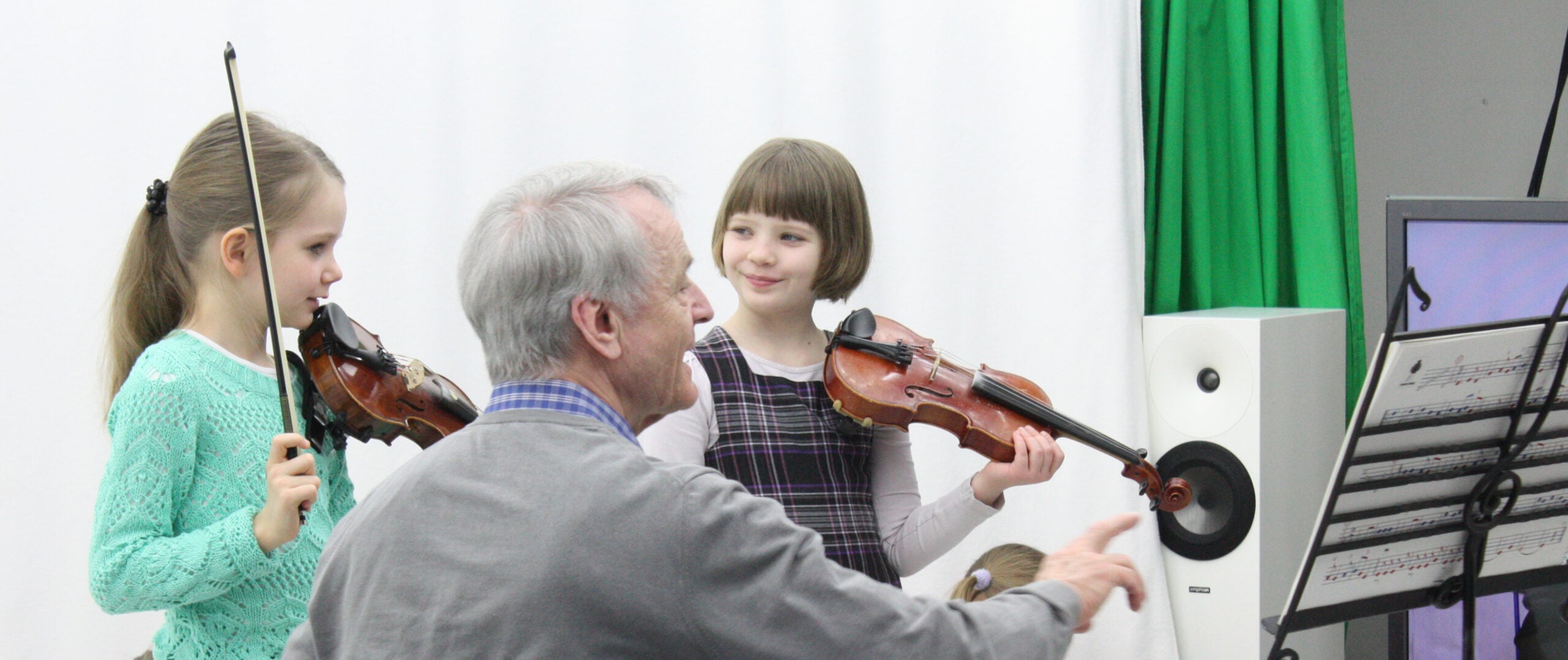 I feel blessed to have had opportunities over many years to spend days and weeks delving into best-practice string teaching with both Géza and Yvonne Frye. These workshops and training weeks have been many things – humbling, thought-provoking, information-loaded, at times challenging, motivating and inspiring – think ‘seeing the light’ type enlightening, all said and done. For me, my contact with Colourstrings has encouraged a growth mindset in both musicianship and technique. Working to intertwine its concepts and musical leadership in all situations helps grow layers of understanding each year! Any time spent with Yvonne Frye brings further insights, from blow-your-mind revelations to tiny, yet significant gems. On entering a fifth decade of teaching, I can honestly say that Colourstrings’ pedagogy, especially through Yvonne’s lens, has drawn more love every day in helping string students connect with their instruments and evolve. I feel happier teaching, throwing open the doors to music-making and future possibilities.
Yvonne Frye is a passionate German protégé of Géza’s, who was chosen by him to take Colourstrings into the future. She is now a lecturer in upper strings pedagogy at the Sibelius Academy/Institute of the Arts in Helsinki and, interestingly, is best friends with Géza’s daughter Réke, who also teaches violin at the Sibelius Institute. Her manner in sessions (especially those where time has been allowed to go in-depth) is attractive and refreshing. She is patient, generous, and detailed during training, demonstrating with calm integrity a highly effective, long-sighted approach to educating children. Any sessions on Colourstrings are supported by new research and numerous clips from small-group lessons demonstrating the approach in action.
Yvonne’s workshops cover principles and methods informed by current research across relevant areas: autonomous learning and motivation, child psychology, and current biomechanics related to the instruments. The instruction is age-appropriate. Structured skill building occurs in a child-friendly manner. Clever, fun-filled strategies underpin Yvonne’s insistence on best physical patterning at every turn, including:
- balanced stance and instrument positioning,
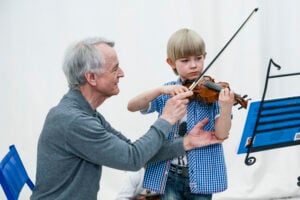
- left-hand pizzicato to shape the left-hand form and finger action,
- use of harmonics for hand form, exact tuning and shifting action from the start,
- bow hand balance from the rocket position and starting full strokes successfully from the heel of the bow,
- use of the right arm gross motors and upper arm weight behind strokes,
- free-flowing movements,
- establishing musical beat in the body,
- feeling and signalling varied tempi and rhythmic divisions,
- breathing and leading into the music,
- light left-hand action to facilitate velocity, accuracy and vibrato.
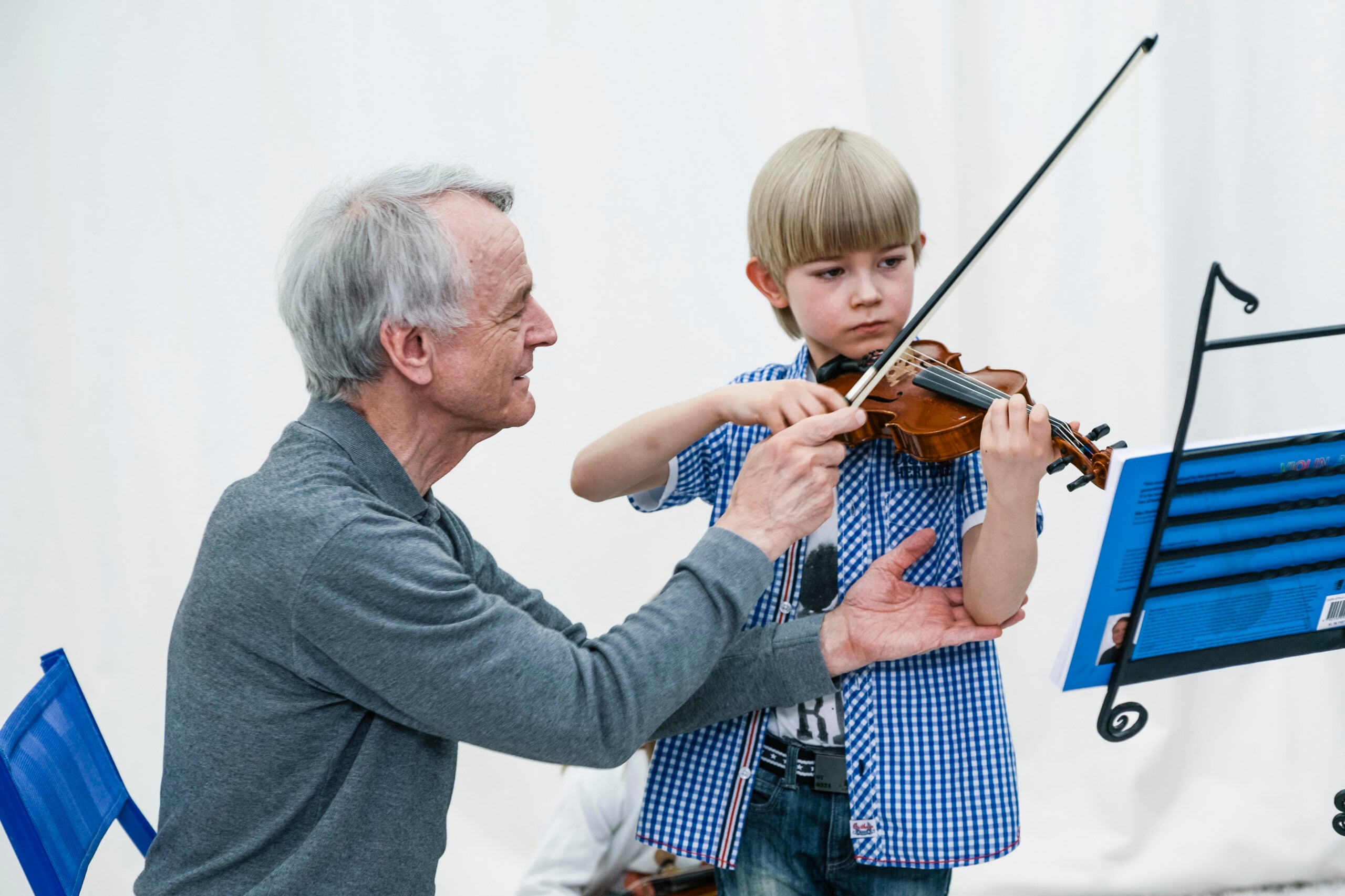
Aural skills take the lead: there is early experience and recognition of sympathetic string vibration (ringing tones), constant expectation of centred tuning, searching and reinforcing points of resonance through the use of harmonics. Free shifting up and down the fingerboard occurs from the get-go, with full use of bow length.
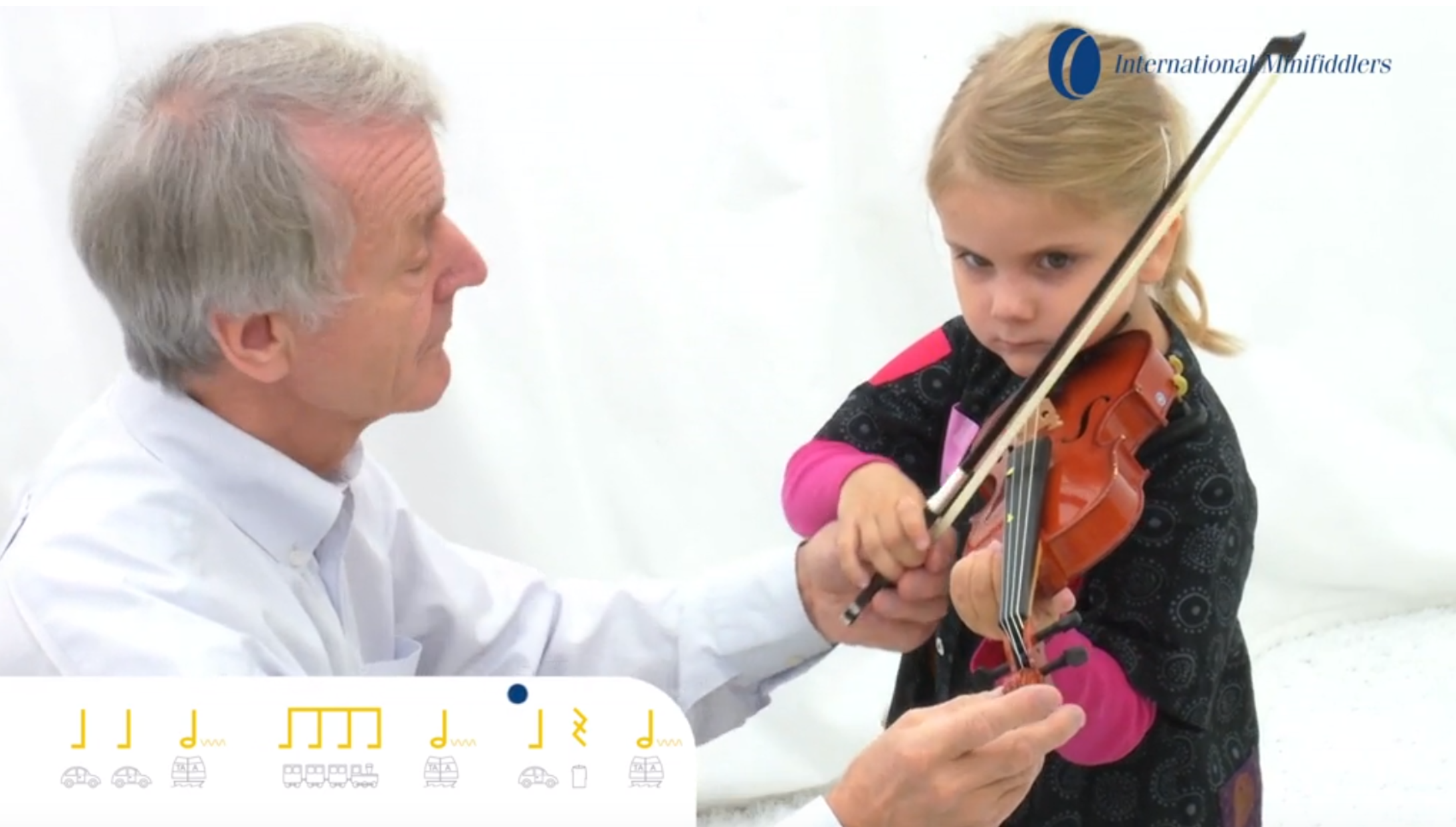 In the past, sessions have led us through ways to foster improvisation within appropriate parameters, memory, and transposition (useful on many levels), including learning/reinforcing new finger patterns and exploring the fingerboard. Musical outcomes are constantly prioritised. These include exploring phrasing, emotion, character and stories. Attendees have loved the hands-on buddy sessions, where we practised the art of musical ‘bow-guiding’ from very beginner stages to sautillé, and had help with moulding the left-hand form and bow holds, and guiding vibrato.
Yvonne demonstrates strategies to help produce a well-rounded musician through training:
- The ear
- The musical intellect: reading, anticipation, understanding of structure and composition
- The emotions and imagination, including musical phrasing and style
- Fingerboard geography, finger fitness, efficient and freedom of body mechanics
Colourstrings training provides just so much help to instrumental teachers! Notable differences from other methods include:
- Guiding as a means of feeding free playing motions into students’ bodies and maintaining positive physical habits

- Use of harmonics and left-hand pizzicato to help establish left-hand fundamentals
- Use of the full bow length from the start
- Integration of Kodaly-based ear training through songs, singing in solfege using moveable “Do”, constant rhythm subdivisions and coordination challenges
- Teaching each new element step by step; leading from the known to the unknown
- Chamber music experiences and activities at every group lesson lead to performing duets, chamber music and string orchestra
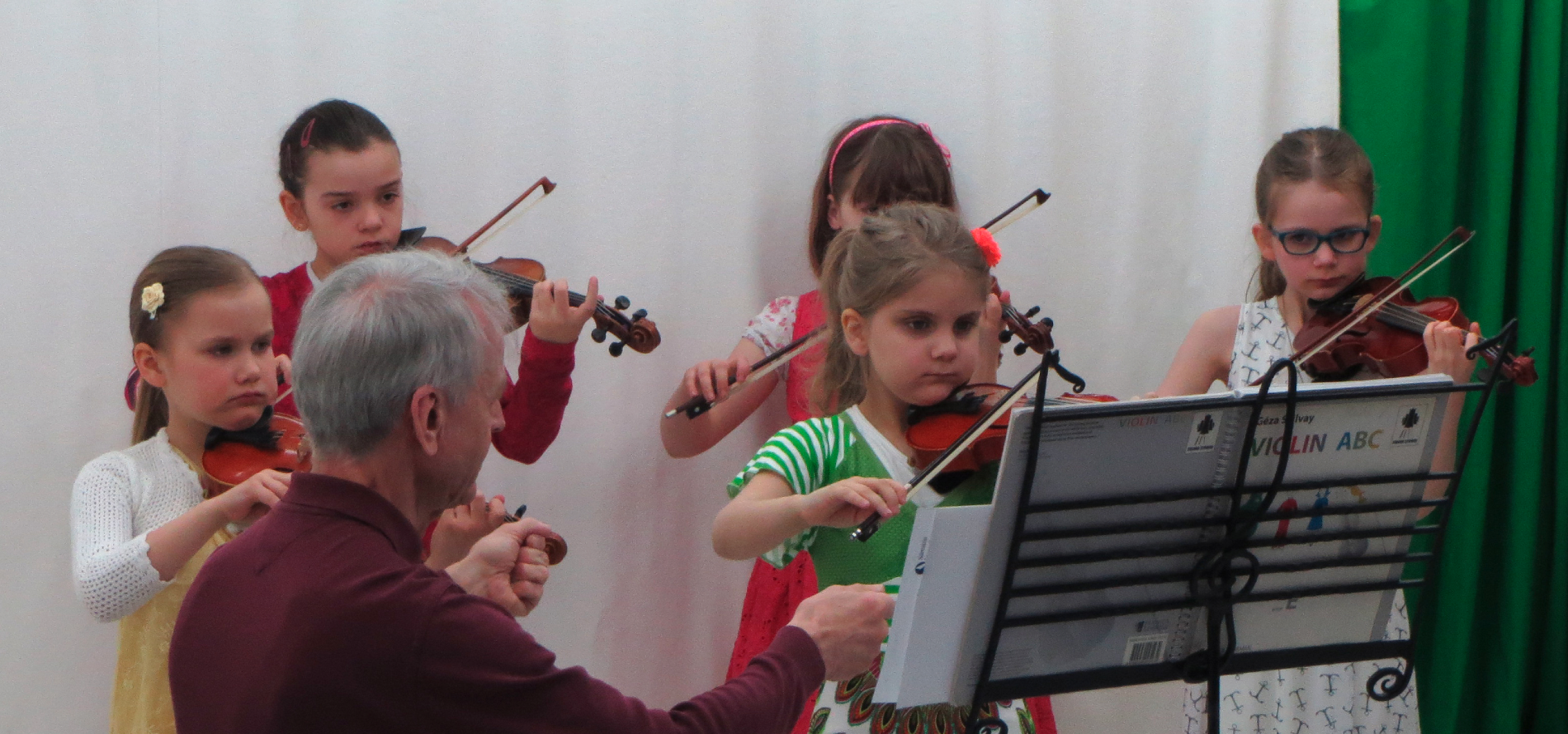
The results of the undiluted system, both in the long term and day to day with students, are impressive. Countless beautiful musicians have been trained through Colourstrings, and many Finnish players are represented in the world’s top orchestras, including the Australian Chamber Orchestra. What a privilege it is to gain insights into proven methods that can pave the way to performance confidence and pleasure at these high levels, without travelling overseas!
As a young or experienced Australian string teacher, it takes commitment and time to synthesise and practise elements of this comprehensive system. Yet the payoff is a boon to our vocation. Magic can happen when this knowledge is woven into the foundation of our everyday lessons and our bigger picture. For example, I now introduce the instrument through Colourstrings, and as the fundamentals are established in its Book B, pair it with Encore Music Maestros Books 1 and 2. I find this a recipe for success with beginner students of different ages.
If you love teaching strings, no matter the context, I encourage you to step through a special PD door next January. My two children blossomed enormously in their teaching of violin and cello after their week of Colourstrings training in Toowoomba in 2019, organised by Celia and Rod Edgerton and Helen Holt. Neither uses the books comprehensively, but both have effectively integrated the knowledge and continue to grow as teachers. I hope you might treat yourself and your students by investing a few days with this precious string educator, Yvonne Frye, and her violinist husband, Teppo Ali-Mattila. The wealth of ideas and layers of insights will be an inspiration!
Click here to watch the recording of our recent webinar with Géza Szilvay.